
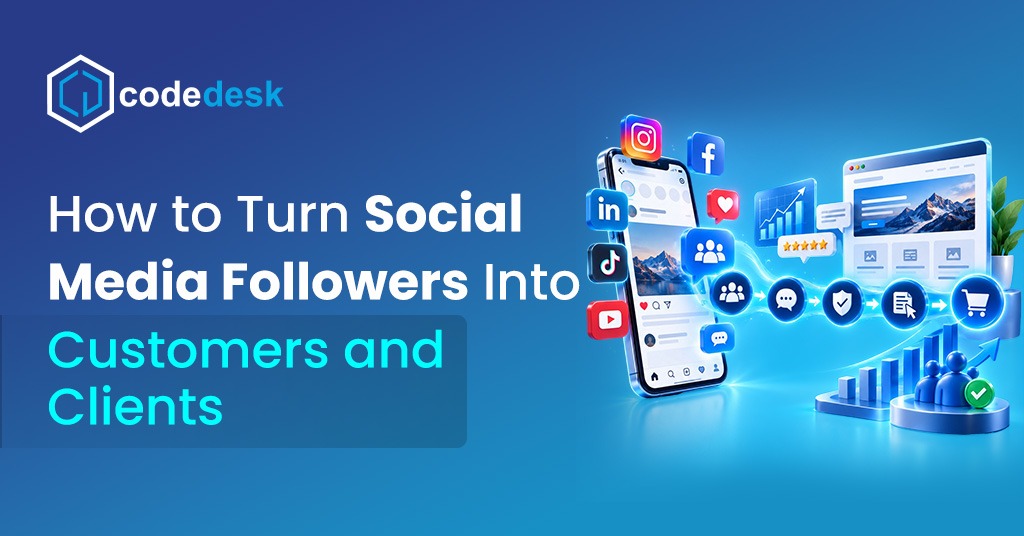
Having a growing number of followers on social media can be encouraging, but followers alone do not necessarily generate business. The real opportunity comes when people who follow your brand begin visiting your website, making enquiries, booking services or purchasing your products.
For most companies, the issue is not getting people to check out their social media pages. The problem is getting them from being mere spectators to actually doing something.
Converting likes and followers to customers is not as easy as just posting marketing messages on your social media pages. It involves knowing who your target market is, what they need, establishing trust, and making it easy for them to take action.
Social media marketing allows you to use your profiles to generate leads, grow your customer base and your company.
Why Social Media Engagement Matters for Conversions
Social Media Engagement plays an important role in the path from the follower to becoming a customer.
If one comments on your post, responds to your story, saves your post, or DMs you then this is a much more engaged user than one who only follows you on your social network.
This form of engagement also helps businesses to get insight into their audiences.
Questions from comments may help to know about problems of prospective customers, objections from direct messages can be known, preferences can be found through polls, and what topics people like can be found out through often saved posts.
Engagement can help businesses:
- • Build familiarity with potential customers
- • Understand audience questions and concerns
- • Demonstrate knowledge within a particular industry
- • Start conversations with interested prospects
- • Identify topics for future content
- • Create opportunities for website visits and enquiries
However, engagement should not be treated as the final objective. The purpose is to create a path towards a relevant business action.
How to Turn Social Media Followers Into Customers and Clients
Client transformation from a follower is a process that involves interaction of an individual with a business on multiple occasions before feeling confident to purchase or enquire about the products.
The below methods can be used to convert online following into sales.
1. Understand Your Ideal Customer
All followers do not necessarily become customers.
It is important for a company to know what kind of people or organization they want to target before creating social media content.
Think about:
- • What does the perfect customer require?
- • What problem are they solving?
- • What are their queries before buying something?
- • What concerns could prevent them from purchasing?
- • Which social platforms do they use?
- • What type of content do they respond to?
When you have taken all these considerations into account, your content becomes more targeted.
For instance, a business-to-business organization based in the United Kingdom can come up with LinkedIn content focusing on lead generation, customer acquisition, and typical problems faced in the business environment, instead of posting generic motivational messages.
2. Create Content That Solves Real Problems
It does not always mean that people follow a particular company simply because they wish to see advertisements on a daily basis. The content that people find useful or interesting usually makes them follow an account.
You could create:
- • Step-by-step guides
- • Industry tips
- • Short tutorials
- • Common mistake posts
- • FAQs
- • Checklists
- • Expert advice
- • Case studies
- • Product demonstrations
- • Problem-and-solution posts
For example, a social media marketing agency UK businesses work with could publish an article explaining why a company’s social media posts receive engagement but generate very few enquiries.
This provides value while also demonstrating the agency’s expertise.
The objective is to make your content useful enough that followers begin to associate your business with solutions to their problems.
3. Build Trust Before Asking for the Sale
It is especially crucial when you offer professional services or more expensive products.
The client will visit your website multiple times before reaching out to you. While doing this, he or she is assessing your competence and reliability.
Use your social media profiles to demonstrate what your business can actually deliver.
You can share:
- • Client testimonials
- • Reviews
- • Case studies
- • Project examples
- • Customer feedback
- • Team expertise
- • Results and achievements
- • Behind-the-scenes content
It is especially crucial when you offer professional services or more expensive products.
The client will visit your website multiple times before reaching out to you. While doing this, he or she is assessing your competence and reliability.
4. Turn Comments and DMs Into Conversations
A comment or direct message can be the beginning of a customer relationship.
If someone asks a genuine question about your service, do not treat it as just another notification. Respond clearly and helpfully.
You can also use content to encourage conversations.
For example:
“What is the biggest challenge your business faces with social media?”
A question like this can encourage followers to share their experiences. Their answers may also provide valuable insight into what your target audience needs.
In the event that you have caught their interest, you can engage them further via direct messages when necessary.
The trick here is never to make every interaction sound like a sales call. First of all, you need to know what the other party requires.
5. Show Real Customer Experiences
Potential customers often want to know what working with your business is actually like.
This is where customer stories and case studies can become powerful content.
Instead of only posting:
“Our social media service helps businesses grow.”
Show the process behind the service.
For example:
Client challenge: Poor engagement and few enquiries.
Solution: Audience research, content strategy, content creation and campaign optimisation.
Result: Enhanced engagement and better quality of enquiries.
Always be sure that results reported are truthful and that you have consent for sharing the details of the client.
Authentic stories can lend credibility to your social media posts and also give a preview of what to expect from your business.
6. Use Stories to Keep Your Audience Engaged
Social media Stories provide businesses with a more immediate way to communicate with followers.
Rather than using Stories only to repost your latest content, use them to create regular opportunities for interaction.
You could share:
- • Quick tips
- • Polls
- • Questions
- • Team updates
- • New services
- • Client feedback
- • Product demonstrations
- • Behind-the-scenes content
- • Limited-time offers
- • Links to relevant pages
Interactive features can also help identify people who are particularly interested in a specific topic.
For example, a digital marketing company could ask:
“Are you currently getting enough leads from your website?”
People who respond can become part of a more meaningful conversation.
7. Make Your Stories More Conversion-Focused
A simple Story sequence could look like this:
Story 1: Identify a common customer problem.
Story 2: Explain why the problem occurs.
Story 3: Give a practical tip.
Story 4: Introduce your relevant service.
Story 5: Provide a clear CTA.
This creates a natural transition from education to business promotion.
7. Create Clear Calls to Action
A follower may be interested in your service but still not know what to do next.
That is why every conversion-focused post should have a clear purpose.
Your CTA could ask people to:
- • Visit your website
- • Book a consultation
- • Request a quotation
- • Send a direct message
- • Download a guide
- • Contact your team
- • View a service page
- • Sign up for an email list
The CTA should match the content.
If you have published a post about improving social media performance, you could invite readers to contact your team for a social media consultation.
Avoid giving followers too many instructions at once. One clear next step is generally easier to understand.
8. Optimise Your Social Media Profile
Your content may attract visitors to your profile, but your profile itself needs to explain what your business does.
A potential customer should be able to understand:
- • Who you are
- • What you offer
- • Who you help
- • Where you operate
- • How they can contact you
Your profile should also contain a relevant website link where appropriate.
Think of your social profile as a mini landing page. Someone who discovers your business through a post should not have to search through several pages to understand what you offer.
9. Use Paid Social Advertising to Reach Relevant Audiences
Organic social media can help build relationships, but businesses can also use paid advertising to reach specific audiences.
Depending on the platform and campaign objective, advertising can be used to promote:
- • Services
- • Products
- • Lead-generation forms
- • Website pages
- • Events
- • Offers
- • Content
Retargeting can also be used to reconnect with people who have already interacted with your business, subject to the platform’s available targeting options and applicable privacy requirements.
The important point is that paid social should support a clear objective. Spending money simply to increase impressions does not necessarily mean that more customers will be generated.
10. Measure Leads and Conversions, Not Just Followers
Follower growth is easy to see, but it does not tell the whole story.
If your objective is generating business, monitor metrics that connect social activity with commercial outcomes.
Useful measurements can include:
- • Profile visits
- • Website clicks
- • Link clicks
- • Direct enquiries
- • Lead forms
- • Consultation bookings
- • Sales
- • Conversion rate
- • Cost per lead
- • Revenue generated from campaigns
For example, a post with 2,000 views and five relevant enquiries could be more commercially useful than a post with 20,000 views but no enquiries.
The right metrics depend on your business model and campaign objective.
How a Social Media Marketing Agency UK Can Help
Managing social media effectively involves more than creating posts.
Businesses may need audience research, content planning, creative production, community management, paid advertising, analytics and ongoing optimisation.
A social media marketing agency UK businesses choose to work with can help bring these activities together within a structured strategy.
A professional approach can include:
- • Social media audits
- • Audience research
- • Content strategy
- • Content calendars
- • Social media management
- • Paid advertising
- • Community engagement
- • Performance reporting
- • Conversion tracking
For businesses that have an existing audience but are struggling to turn attention into enquiries, reviewing the complete customer journey can reveal where potential customers are dropping out.
Choosing the Right Social Media Marketing Service Provider
If you decide to outsource your social media, look beyond follower growth when assessing a social media marketing service provider.
Ask how they plan to measure success and whether their strategy is connected to your actual business objectives.
A suitable provider should be able to explain:
- • Which platforms are relevant to your audience
- • What type of content they recommend
- • How they plan to generate engagement
- • How leads will be handled
- • Which metrics will be reported
- • How campaigns will be tested and improved
The right strategy will depend on your industry, audience, budget and objectives rather than following exactly the same approach for every business.
Final Thoughts
Turning social media followers into customers and clients does not happen simply by increasing your follower count.
The process starts with understanding your audience and creating content that addresses genuine problems. From there, businesses can build trust through useful information, customer experiences and consistent interaction.
Clear calls to action, effective Stories, optimised profiles and relevant landing pages can then make it easier for interested followers to take the next step.
Most importantly, measure what happens after the engagement. Website visits, enquiries, bookings and sales provide a clearer picture of whether your social media activity is contributing to business growth.
If your business has an active social media audience but is not generating enough enquiries from it, a structured social media strategy can help connect your content with the wider customer journey.
Frequently Asked Questions
How can I turn social media followers into customers?
Start by understanding your target audience, creating useful content and building trust. Then provide clear calls to action that encourage followers to visit your website, make an enquiry, book a service or make a purchase.
What type of social media content generates customers?
Content that addresses specific customer problems can be effective. Educational guides, case studies, testimonials, demonstrations, FAQs and problem-solving posts can help demonstrate your expertise and move potential customers towards making an enquiry.
Do I need thousands of followers to generate customers?
No. A smaller audience that closely matches your target market can still provide valuable business opportunities. Relevance and engagement are important alongside audience size.
Should I consider using paid advertising on social media platforms?
Paid advertising can be useful when you have a clearly defined target audience and specific campaign goals. It can complement organic social media efforts by helping brands reach relevant audiences and re-engage people who have previously interacted with their business.
What does a social media marketing service provider do?
A social media marketing service provider can assist with areas such as strategy development, content creation, social media management, community engagement, paid advertising and performance reporting. The services provided will vary depending on the provider and your business needs.
How can I assess how many customers social media brings me?
Monitor activities that relate to your business goals, such as website clicks, enquiries, completed forms, consultation requests and sales. These metrics can help you understand which social media activities are contributing to conversions and business growth.
